Solar Hot Water Is Back: Five Ways to Heat Water Using Solar PV and Cheap Electricity
By Gordon Routledge
Monday 27th May 2027
SHARE IT
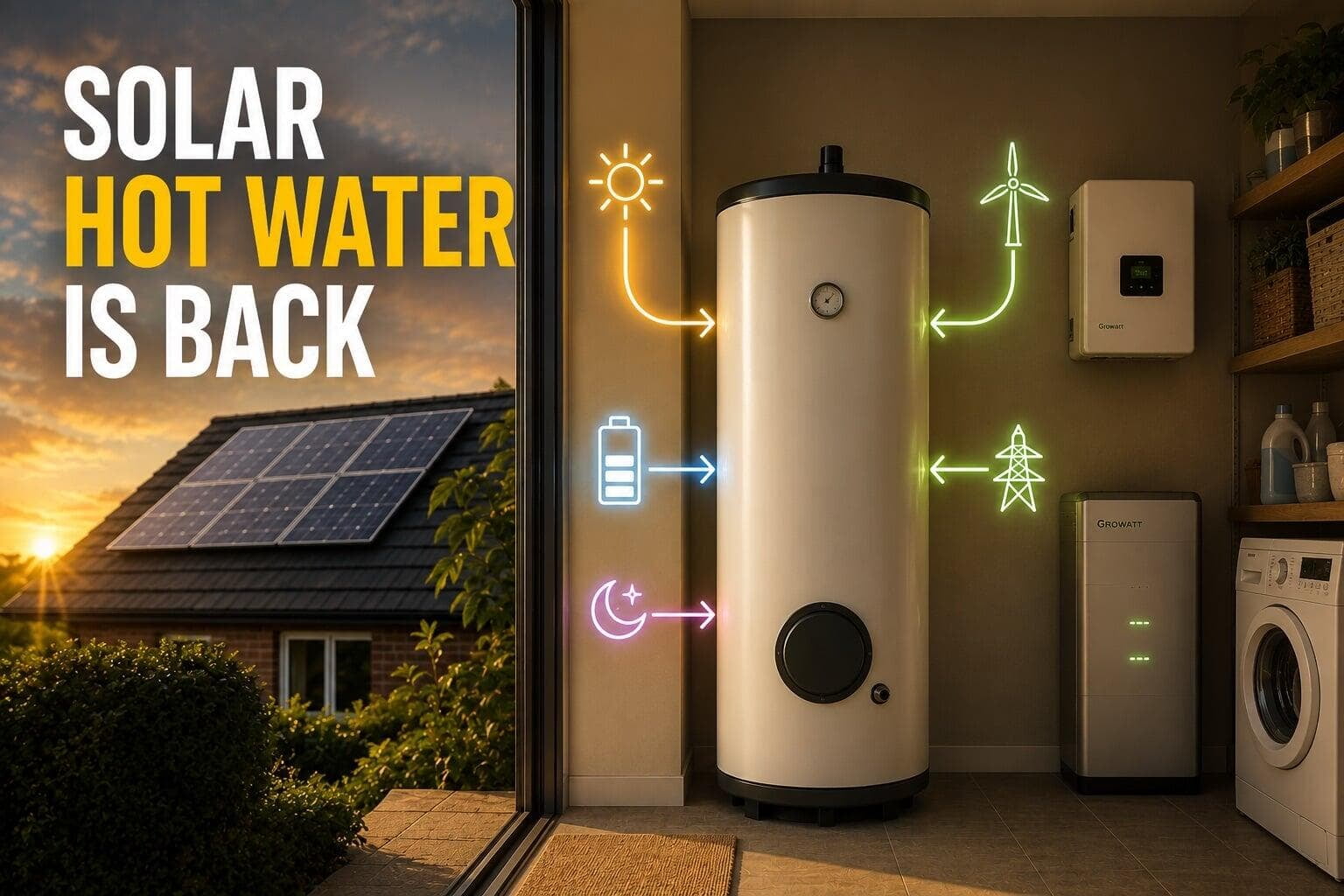
For decades, heating water with electricity was something most households tried to avoid.
If you had mains gas, it was usually cheaper. If you lived beyond the gas network, heating oil often won the argument on cost.
The immersion heater was therefore relegated to backup duty. It was useful when the boiler packed up, or when somebody had mysteriously used an entire cylinder before breakfast, but it was rarely viewed as the economical option.
Then the world became rather more complicated.
Russia’s invasion of Ukraine sent shockwaves through international gas markets. Oil prices became increasingly unpredictable. Presidents, pipelines, tariffs, trade disputes and global supply chains all developed an uncomfortable habit of appearing on domestic energy bills.
At the same time, solar panels became dramatically cheaper. Home batteries started appearing in garages and utility rooms. Electricity tariffs became more flexible and, occasionally, completely peculiar.
Some tariffs now offer electricity for only a few pence per kilowatt-hour overnight. Others change price every half-hour. During periods of surplus renewable generation, electricity prices can even fall below zero.
Suddenly, heating water with electricity no longer looks ridiculous.
In the right circumstances, it can be the cheapest option available.
That has transformed the role of the humble hot water cylinder. Instead of simply storing hot water, it can store low-cost energy from solar panels, batteries, off-peak tariffs and an increasingly renewable electricity grid.
The question is no longer simply:
Should I heat my water with electricity?
It has become:
Where is the cheapest kilowatt-hour coming from today?
Sometimes it is surplus solar generation.
Sometimes it is electricity costing 4p per kilowatt-hour at three o’clock in the morning.
Sometimes it is a battery that has already reached full charge.
Sometimes it comes from a separate group of solar panels that are not connected to the home’s inverter at all.
And increasingly, the decision is being made by software rather than a time switch screwed to the wall.
Here are five of the main ways installers and homeowners can take advantage of this changing energy landscape.
1. Using a Solar Diverter to Heat Hot Water
The retrofit champion
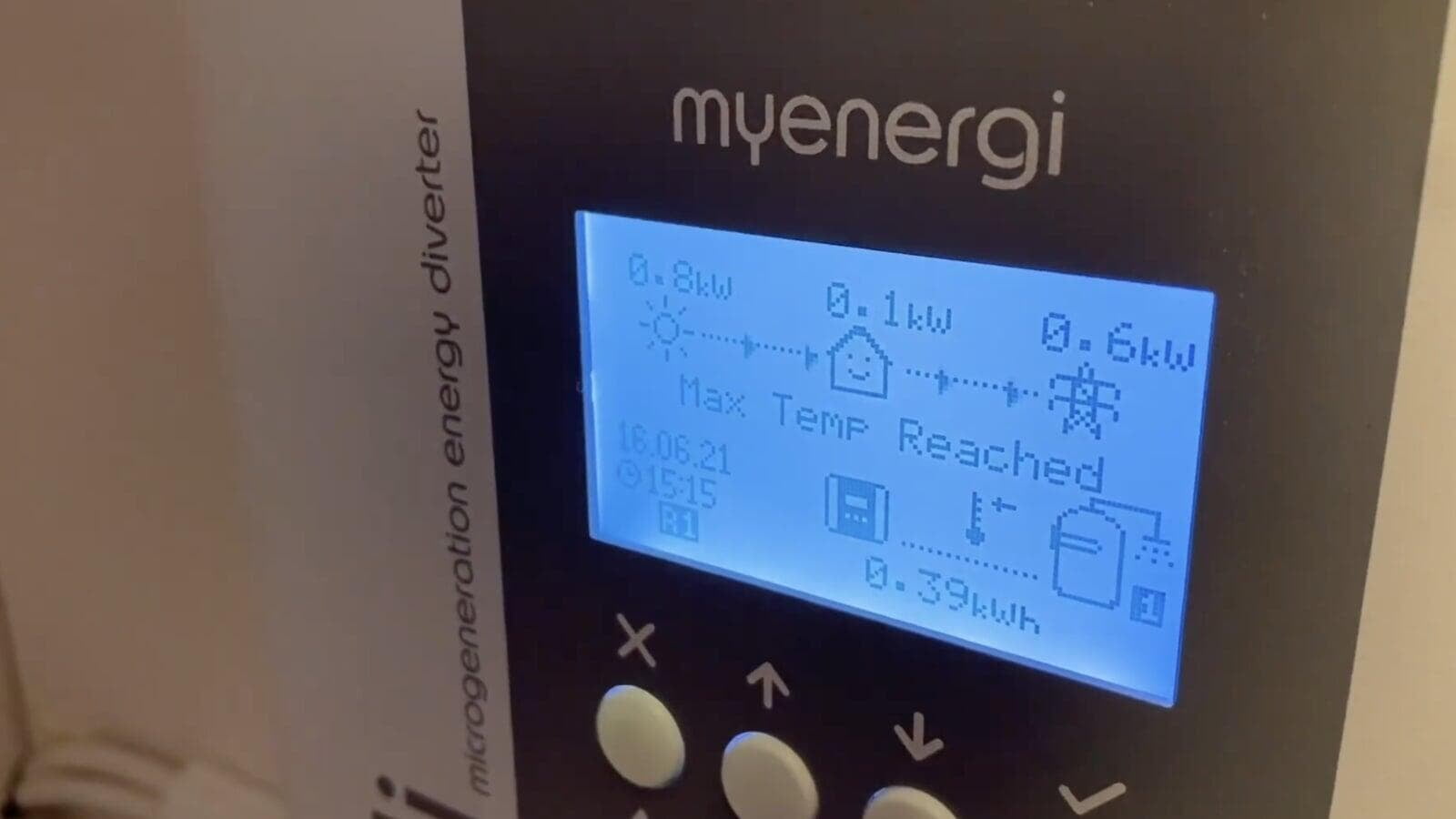
If a property already has solar PV and a conventional hot water cylinder, a solar diverter is the obvious place to begin.
The principle is beautifully simple.
When the solar panels are generating more electricity than the house is consuming, the diverter sends that surplus energy to the immersion heater instead of exporting it to the grid.
The result is tomorrow morning’s shower being heated by this afternoon’s weather.
Devices such as the myenergi Eddi use a current transformer, or CT, to monitor power flowing to and from the grid. When export is detected, the controller adjusts the power delivered to the immersion heater to match the available surplus.
This modulation is important.
A conventional immersion heater might be rated at 3kW, but the diverter does not need 3kW of spare generation before it can start working.
If the house is exporting 300W, the immersion can receive approximately 300W.
If the sun appears and export rises to 1.8kW, the controller increases the immersion output.
When a cloud arrives, it backs off again.
This allows the cylinder to absorb small amounts of surplus generation throughout the day without importing significant electricity from the grid.
Why choose a solar diverter?
A diverter can be an excellent retrofit because it normally uses the existing:
- solar array
- inverter
- hot water cylinder
- immersion heater
There is no need to replace the cylinder or install additional solar panels.
It can also work well in homes without battery storage, where surplus daytime generation would otherwise be exported.
Things to consider
The financial argument is not as straightforward as it once was.
Some export tariffs now pay more per kilowatt-hour than the equivalent cost of heating water with gas, oil or cheap overnight electricity.
In those circumstances, deliberately diverting every spare unit of solar generation may not produce the greatest financial return.
Battery charging priorities must also be considered. In many homes it will make more sense to charge the battery first and heat water only after the battery has reached a chosen state of charge.
eFIXX verdict
Still the retrofit champion.
For a home with existing solar PV, a conventional cylinder and no particularly generous export tariff, a properly configured solar diverter remains difficult to beat.
Watch: Our installation and review of the myenergi Eddi solar diverter.
2. Controlling an Immersion Heater from a Hybrid Inverter
Let the inverter decide
Battery storage changes the way surplus solar generation can be managed.
Instead of simply asking whether the property is exporting electricity, the energy system can ask a more useful question:
Is the battery full?
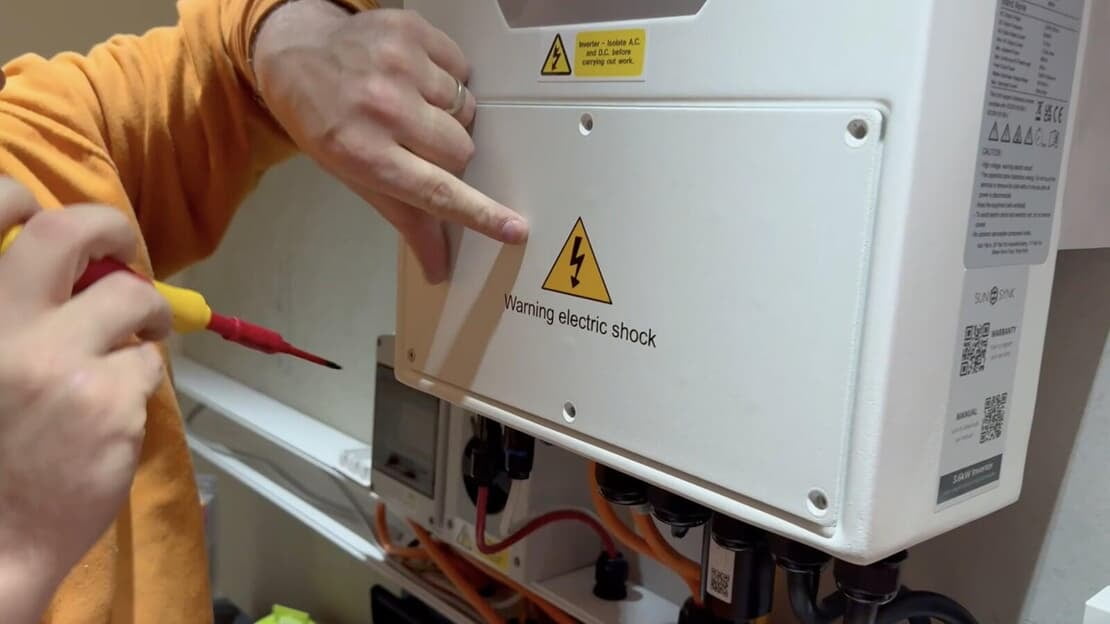
Many hybrid inverters include an auxiliary, smart-load or generator connection that can be configured to supply an immersion heater or another controllable load.
In the Sunsynk system we examined, the auxiliary output could be programmed to switch on when the battery reached 100% state of charge and switch off when it fell below a lower threshold, such as 90%.
A minimum PV generation level could also be specified. This prevents electricity bought cheaply overnight and stored in the battery from immediately being used to heat water the following morning.
Unlike a dedicated solar diverter, this type of output will usually switch the immersion heater fully on or off. It does not normally vary the immersion power continuously to match the available solar surplus.
However, the battery acts as a buffer.
If a cloud passes over the array, the battery can temporarily support the immersion load instead of the heater repeatedly switching on and off.
Why choose inverter-controlled hot water?
The control functionality may already exist inside the inverter.
That means the additional hardware cost can be relatively low, particularly where a suitable auxiliary output and control interface are already available.
The inverter also understands what is happening across the complete system, including:
- PV generation
- battery state of charge
- household consumption
- grid import and export
It can therefore make a more informed decision than a standalone relay.
Things to consider
An immersion heater is a substantial electrical load.
Installers must consider:
- inverter pass-through capacity
- auxiliary output ratings
- protective device selection
- cable sizing
- RCD requirements
- existing cylinder thermostats
- over-temperature protection
Because this is generally an on-or-off strategy, it works best where a battery or sufficiently large PV array can support the full immersion load.
eFIXX verdict
If you have already bought the brains, let them earn their keep.
For homes with hybrid inverters and battery storage, an auxiliary load output can offer a simple and effective route into solar-enabled hot water.
Watch: How we used a Sunsynk hybrid inverter auxiliary output to control an immersion heater
3. Heating Water Directly from Solar Panels
Forget the inverter
For years, we have assumed that every solar panel on a building must connect to an inverter.
The my-PV SOL•THOR asks a slightly awkward question:
Why?
If the sole purpose of a group of panels is to heat water, why send their power through the main inverter and into the AC electrical system at all?
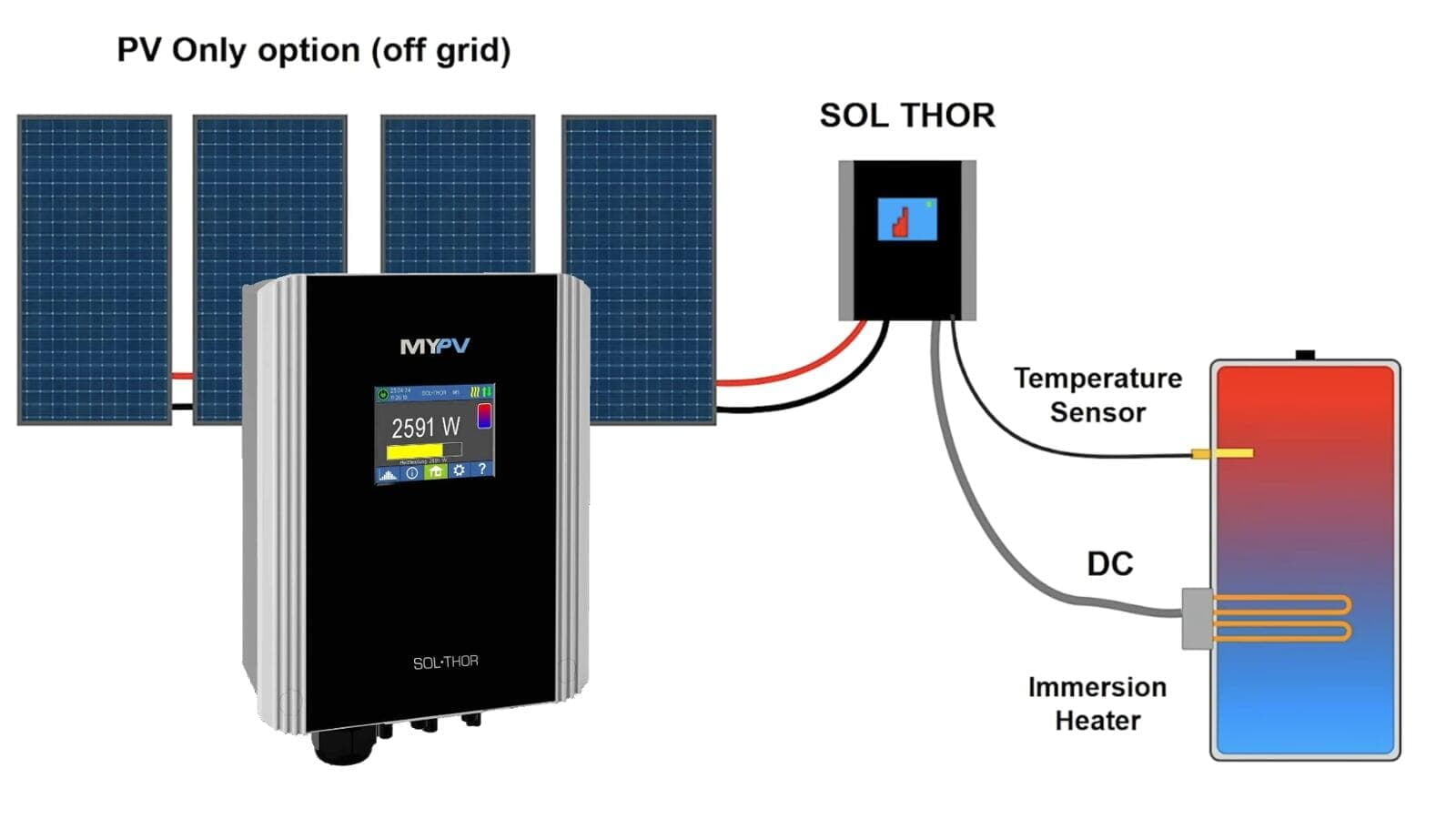
The SOL•THOR connects a dedicated solar PV string directly to an existing resistive immersion heater.
The panels supply DC power to the unit’s built-in maximum power point tracker, or MPPT. The controller then adjusts the power delivered to the heating element to match the solar energy available.
Those panels do not:
- export to the grid
- charge the battery
- contribute to the inverter output
- compete with the EV charger
- wait behind household loads
They simply convert sunlight into stored hot water.
This can be particularly attractive where the main solar inverter has reached its maximum capacity, the property is subject to an export restriction, or additional roof space is available for dedicated water-heating panels.
The system featured in our installation can control resistive heating elements up to 3.6kW. Its solar input incorporates one MPPT, two DC inputs, a maximum combined input current of 26A and a maximum open-circuit voltage of 230V.
Cold-weather open-circuit voltage calculations are therefore essential. Our original proposal used four panels, but the manufacturer’s sizing tool showed that the string voltage could exceed the controller’s limit during cold winter conditions. The final installation used three panels instead.
Working from low solar power
One of the most interesting features of direct-PV water heating is its ability to operate over a wide power range.
The SOL•THOR has a low start-up voltage and continuously regulates the immersion output to match the PV input.
This means it can begin heating from relatively modest levels of generation rather than waiting for enough solar power to operate the immersion heater at its full rating.
A single modern solar panel could produce around 2 to 3kWh on a good summer day in the UK. That is approximately enough energy to raise 100 litres of water from 25°C to 50°C, although the heating takes place gradually as solar production rises and falls throughout the day.
This opens up applications such as:
- cabins
- shepherd huts
- glamping pods
- remote buildings
- off-grid facilities
where running a new mains cable may be difficult or expensive.
More than a DC immersion controller
A sophisticated direct-PV controller can also manage the hot water system.
The SOL•THOR includes temperature monitoring, touchscreen controls, Wi-Fi connectivity and a web portal displaying PV and cylinder data.
It can use a mains connection for backup heating and schedule that boost to coincide with low-cost electricity periods.
It can also control an external heat source through a relay.
For larger cylinders with upper and lower immersion heaters, stratified charging can heat the upper portion of the cylinder first. This provides a smaller quantity of usable hot water quickly before the system begins heating the remainder of the tank.
In our installation, the three dedicated panels were delivering close to 10kWh per day into a 300-litre hot water cylinder during favourable conditions. This energy was not being exported, was not waiting for battery capacity and did not require the heat pump to interrupt cooling operation to produce domestic hot water.
Things to consider
Dedicated PV water heating requires separate solar modules and suitable roof or ground space.
The panels are committed to water heating, so their energy cannot be redirected to household loads or battery charging.
Careful design is also needed around:
- PV string voltage
- current limits
- panel compatibility
- cold-weather Voc
- temperature sensing
- immersion heater rating
- backup heating arrangements
eFIXX verdict
Not a better solar diverter. A completely different way of thinking.
Direct-PV water heating can be particularly compelling where export capacity is limited, the main inverter is already fully utilised or hot water is required in an off-grid building.
Watch: Our installation and review of the my-PV SOL•THOR direct solar water-heating controller.
4. Using a Smart Switch and Dynamic Tariffs for Hot Water
Sometimes a switch is enough
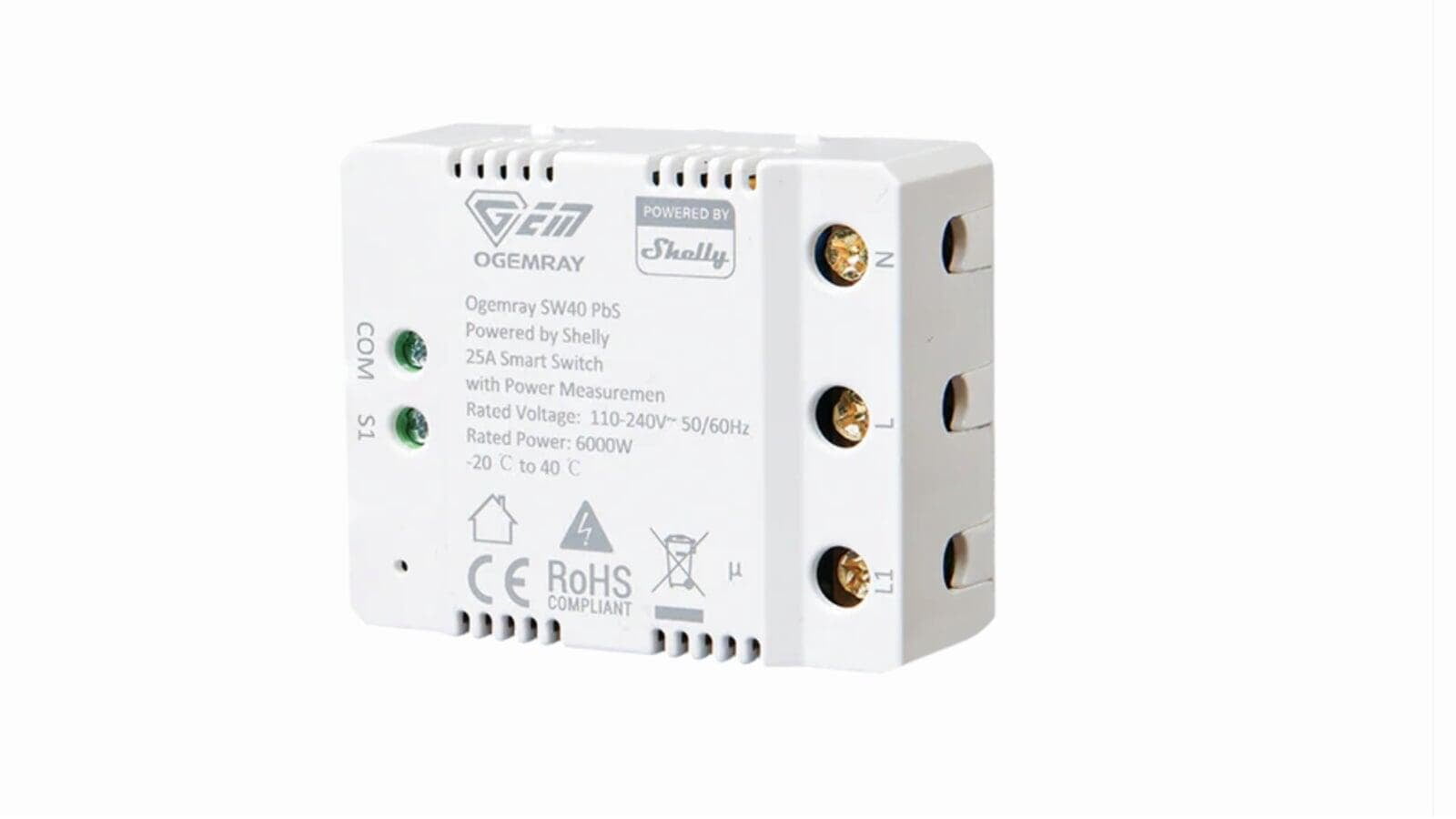
Not every solar hot water system needs to modulate the immersion heater.
In a property with a large enough solar array, it may be sufficient to wait until export exceeds the immersion heater rating and then switch the load on.
For example:
- the property begins exporting more than 3kW
- a high-current smart switch closes
- a 3kW immersion heater starts
- export falls by approximately 3kW
If the available surplus falls below a chosen threshold, the immersion can be switched off again.
A device such as a Shelly high-current smart switch can also respond to other information, including:
- time schedules
- electricity prices
- dynamic tariff data
- battery state
- solar export
- cylinder temperature
- remote commands
This creates a flexible hot water control system without requiring variable power modulation.
Using cheap electricity rather than solar
This approach is not limited to excess PV generation.
A smart switch can heat water during a low-cost overnight tariff or during periods when dynamic electricity prices fall below a chosen level.
The cylinder can therefore be charged from whichever energy source is cheapest:
- midday solar
- overnight grid electricity
- surplus wind generation
- negative-price periods
- a charged home battery
This turns the immersion heater into a controllable thermal load.
Or, to put it another way, the cylinder becomes software-defined.
Why choose smart switching?
The hardware can be comparatively inexpensive and extremely flexible.
It is especially attractive where:
- the solar array regularly exports more than the immersion rating
- modulation is unnecessary
- the home uses a dynamic tariff
- cheap overnight electricity is available
- remote control or automation is required
Things to consider
A switch cannot create energy that is not available.
If a 3kW immersion heater is switched on while only 1.5kW of surplus solar is available, the remaining 1.5kW will be imported from the grid.
The automation therefore requires appropriate thresholds, delays and hysteresis to avoid rapid switching or unintended imports.
The switch, contactor and associated wiring must also be suitable for the continuous resistive load.
The existing thermostat and independent thermal cut-out remain essential safety devices and must not be bypassed.
eFIXX verdict
Sometimes the cleverest controller is simply a very clever switch.
Smart switching offers a low-cost route to combining solar export, off-peak tariffs and dynamic electricity pricing in one control strategy.
Watch: Review coming soon
5. Hot Water Cylinders with Built-In Heat Pumps
The cylinder that brought its own compressor
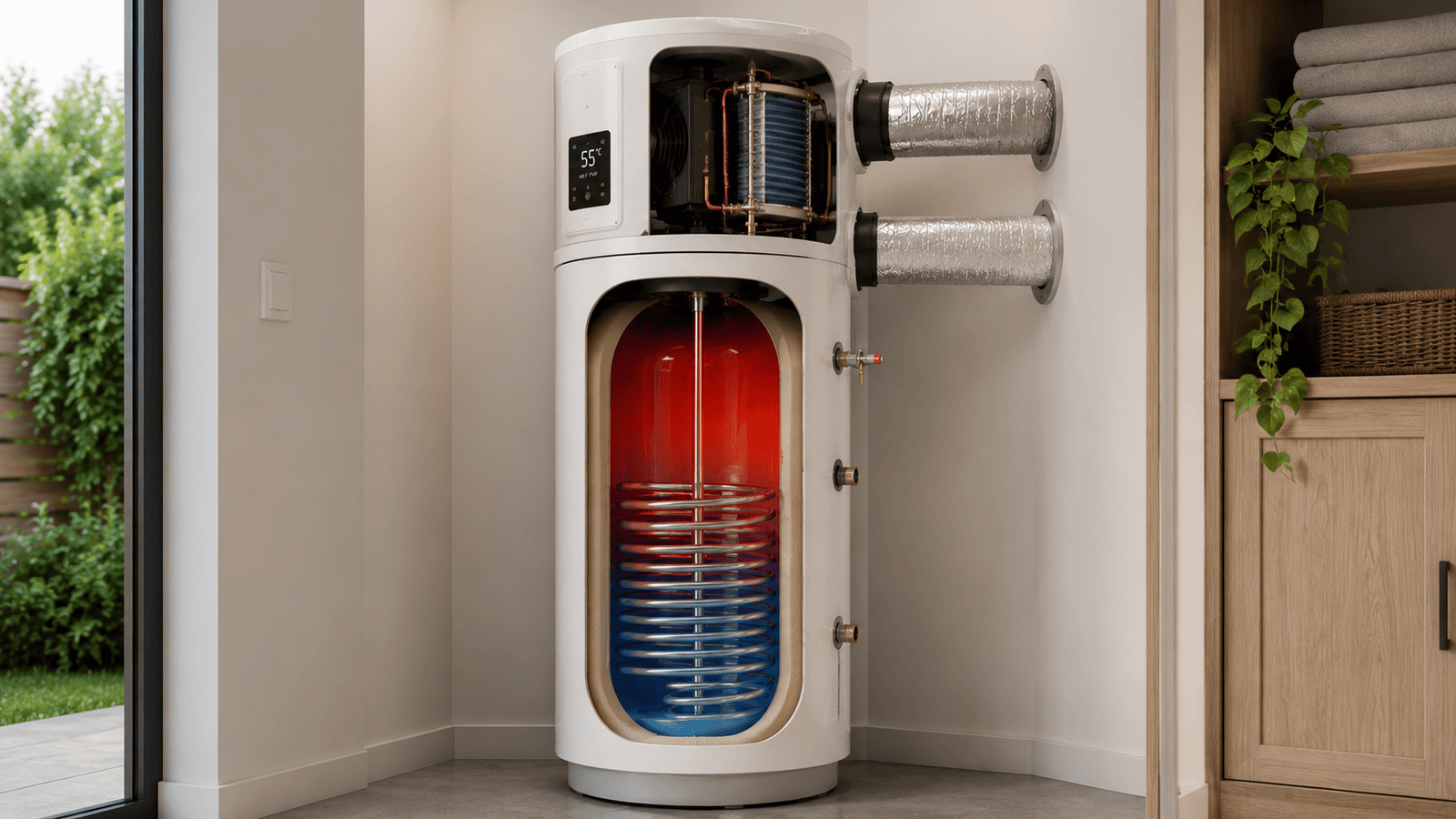
The newest option does not rely primarily on an immersion heater.
Instead, it places a small air source heat pump on or alongside the hot water cylinder.
A resistive immersion heater produces approximately one unit of heat for every unit of electricity consumed.
A heat pump water heater may produce two, three or more units of heat from the same electrical input, depending on the air temperature, water temperature and operating conditions.
This can make heat pump cylinders extremely economical to run.
They can also work well with solar PV. Rather than requiring 3kW to operate a conventional immersion heater, the compressor may use considerably less electrical power while delivering a higher thermal output.
Strong option for new-build homes
Heat pump cylinders are particularly attractive in new construction.
The designer can allow for:
- cylinder dimensions
- airflow
- intake and exhaust ducts
- condensate drainage
- noise
- electrical supplies
- maintenance access
The system can be specified alongside the rest of the building services rather than squeezed into a space intended for a conventional cylinder.
A new opportunity for combi-boiler homes
There is another reason these products are attracting so much attention.
Millions of UK homes rely on combination boilers and no longer have a hot water cylinder at all.
When combi boilers arrived, plenty of households removed the old cylinder and then demolished the airing cupboard as well, gaining valuable space for storage, a larger bathroom or, in some cases, a slightly less tiny spare bedroom.
At the time, it felt like progress.
Now solar panels, home batteries and cheap overnight tariffs have made stored hot water valuable again.
A heat pump cylinder gives a combi-boiler home something it has not had for years: somewhere to store low-cost energy as hot water.
That could make it an excellent option for households looking to move away from gas or make better use of solar PV.
There is, however, one fairly obvious complication.
The cupboard has gone.
Which means finding space for the new cylinder may involve rebuilding an airing cupboard, sacrificing part of a utility room or explaining that the corner of the spare bedroom is about to become an advanced thermal energy storage facility.
This explanation may be technically accurate.
It may not improve its popularity.
The retrofit challenge
Installing a heat pump cylinder in an existing home often involves considerably more than simply finding somewhere to stand the tank.
The project may require:
- intake and exhaust ducting
- condensate drainage
- plumbing alterations
- electrical supplies
- suitable airflow
- acoustic consideration
- maintenance access
All of that is much easier to accommodate in a new build.
In an existing home, particularly one where the original airing cupboard was enthusiastically demolished 20 years ago, the biggest challenge may not be the technology.
It may be persuading the house to give the space back.
Solar start-up and minimum power
A modulating solar diverter can begin feeding an immersion heater with relatively small amounts of surplus power.
A heat pump compressor requires sufficient electrical power to start and continue operating.
This means it may not harvest the first few hundred watts of surplus solar available early in the morning or late in the afternoon.
A battery can help by smoothing the available power, but that adds another layer to the energy strategy.
eFIXX verdict
Excellent when the building is designed around it. More complicated when the building has other ideas.
Heat pump cylinders offer impressive efficiency and could be a powerful option for millions of combi-boiler homes, but the practicalities of finding space, running ducts and reinstating stored hot water must not be underestimated.
Which Solar Hot Water System Is Right for Your Home?
Rather inconveniently for anyone expecting a clear winner, all five approaches can be the correct answer.
They simply solve different problems.
Rather inconveniently for anyone expecting a clear winner, all five approaches can be the correct answer.
They simply solve different problems.
You already have solar PV and a conventional cylinder
A modulating solar diverter remains one of the simplest and most effective retrofit options.
A modulating solar diverter remains one of the simplest and most effective retrofit options.
You have a hybrid inverter and battery storage
An auxiliary or smart-load output may already provide most of the control functionality required.
An auxiliary or smart-load output may already provide most of the control functionality required.
Your inverter or export connection is already at its limit
A dedicated direct-PV water-heating system can add more solar capacity without routing that generation through the main inverter.
A dedicated direct-PV water-heating system can add more solar capacity without routing that generation through the main inverter.
You have a large solar array or a dynamic electricity tariff
A smart high-current switch can heat water when export is high or grid electricity is unusually cheap.
A smart high-current switch can heat water when export is high or grid electricity is unusually cheap.
You are designing a new home
A heat pump hot water cylinder deserves serious consideration, particularly where space, ducts and drainage can be planned from the beginning.
A heat pump hot water cylinder deserves serious consideration, particularly where space, ducts and drainage can be planned from the beginning.
You have a combi boiler and no cylinder
A heat pump cylinder could provide a new way to store cheap or solar-generated electricity as hot water, provided you can find somewhere to put it.
A heat pump cylinder could provide a new way to store cheap or solar-generated electricity as hot water, provided you can find somewhere to put it.
You are heating water in an off-grid or remote building
A dedicated PV controller connected directly to an immersion heater can offer an unusually simple solution.
A dedicated PV controller connected directly to an immersion heater can offer an unusually simple solution.
Hot Water as a Thermal Battery
The most interesting development may not be any individual product.
It is the changing way we think about the hot water cylinder itself.
For years, the home-energy conversation has concentrated on lithium batteries. Yet millions of properties already contain a substantial energy store in the airing cupboard.
It just happens to be filled with water.
A cylinder cannot send electricity back into the house, of course. Once electrical energy becomes heat, it remains heat.
But hot water is consumed every day. If the energy was going to be used for showers, washing and cleaning anyway, storing cheap electricity as heat can be remarkably effective.
Future systems are unlikely to rely on only one input.
They will consider:
- current solar generation
- expected weather
- battery state of charge
- hot water temperature
- household demand
- export payments
- overnight tariffs
- half-hourly electricity prices
- heat pump efficiency
The system will then decide whether the next kilowatt-hour should come from the roof, the battery, a heat pump or the grid at half past three in the morning.
The cylinder does not care whether the energy came from a solar panel, an offshore wind turbine or an unusually generous electricity tariff.
It simply stores it until somebody turns on the tap.
That is why the immersion heater and hot water cylinder are enjoying such an unlikely comeback.
They have not suddenly become clever.
The energy system around them has.
SHARE IT
CURRENT THINKING
Why the UK’s Mains Voltage Could Soon Be Lower
A few volts might not sound like much, but the UK’s electricity networks believe lowering mains voltage could ease grid pressure and make room for more EVs, heat pumps, and solar connections. Here’s what’s changing — and why it matters.
V2G: The Vicar’s Wife Drove it; Now it Runs Your House.

The term game changer gets thrown around like confetti, but with vehicle to grid (V2G) it’s deserved. Your EV is a battery on wheels. With a compatible car and the right charger, vehicle to grid (V2G) will run your home, support the grid, and might even boil the neighbour’s kettle.
Google Pulls Plug on Nest Thermostat Support
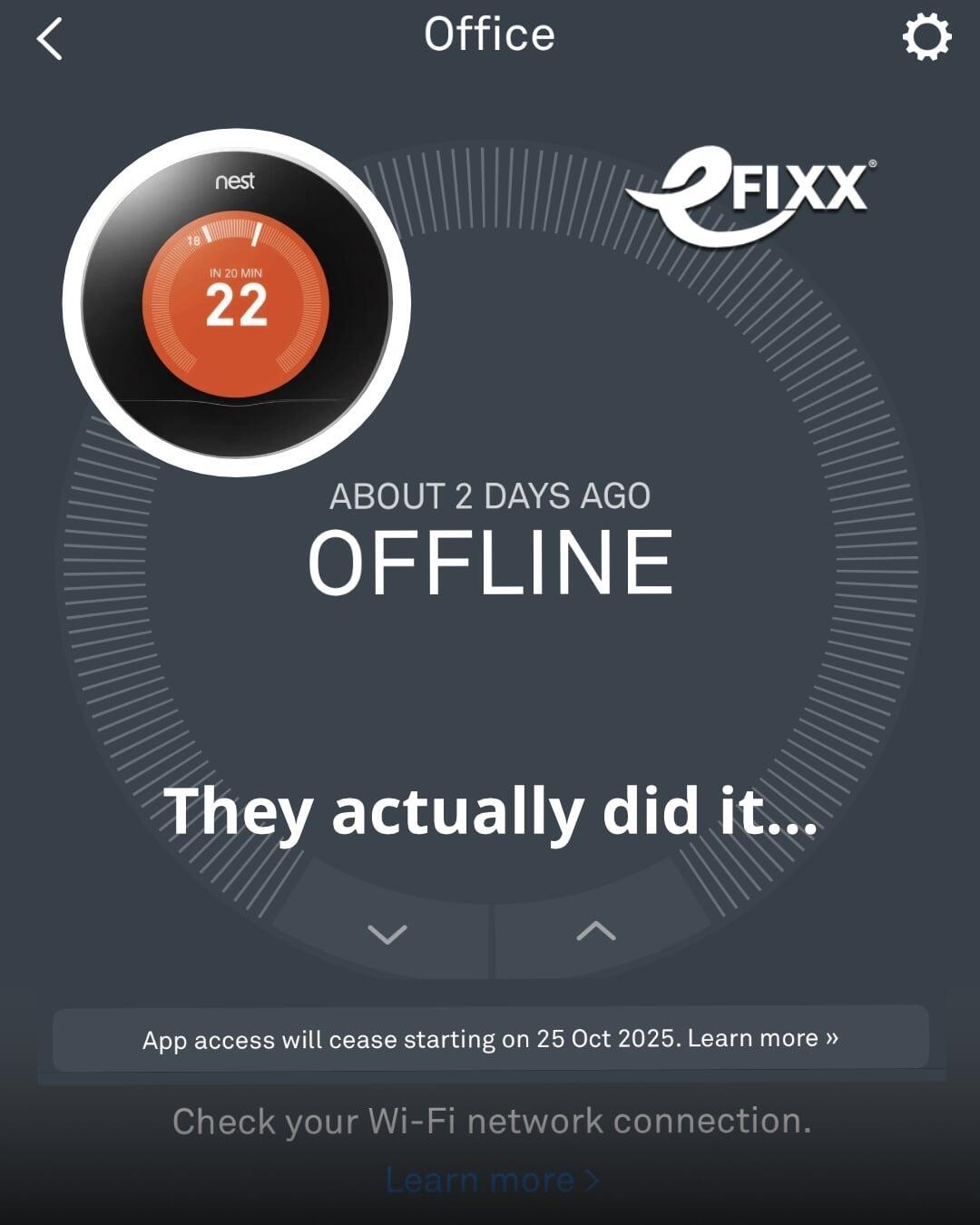
Nest made my home smart; Google just made it useless. Ten years on, my thermostat’s dumb, my smoke alarm’s expired, and my smart lock’s demanding a key — the smart home dream is officially offline.