Training
PAT Testing Explained: What the Law Really Requires
PAT testing isn't automatically annual, isn't just for portable appliances, and doesn't always require an electrician. Here's what the law actually says, how testing works and when electrical equipment needs checking.
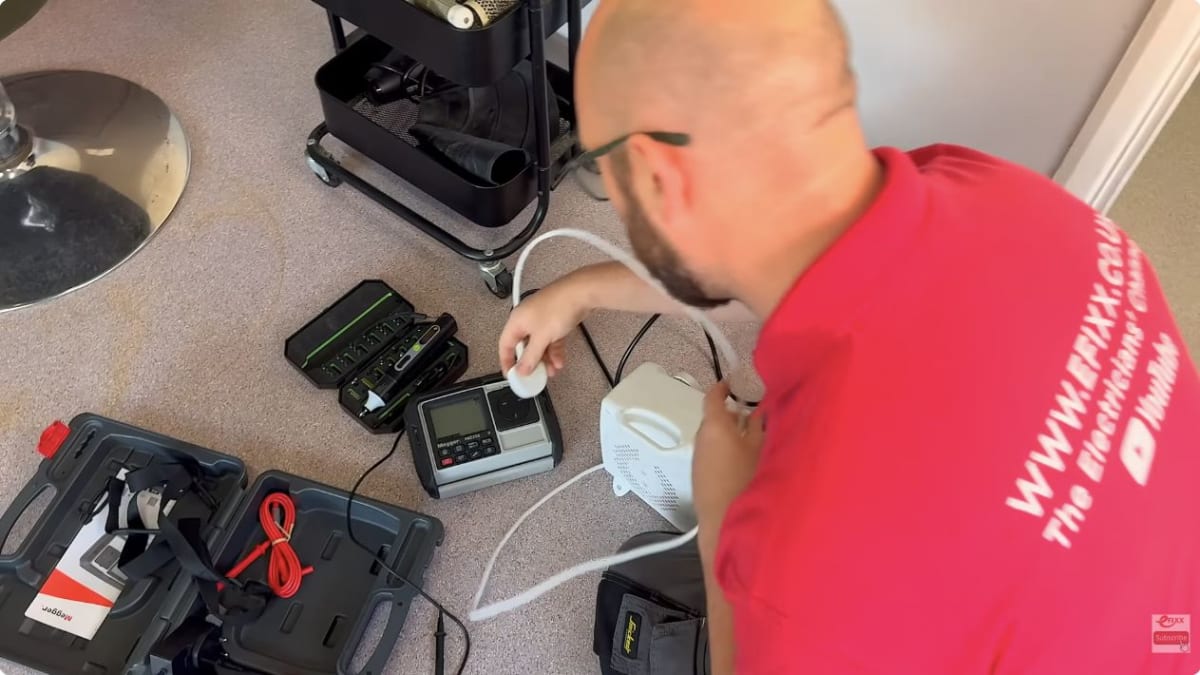
Ask ten people how often electrical appliances need PAT testing, and there's a good chance several will say every 12 months.
Ask whether the law requires a green sticker on every appliance, and you'll probably get a similar answer.
Both are common misconceptions.
PAT testing is one of those familiar electrical industry terms that almost everyone recognises. But there's much more to it than plugging an appliance into a tester and waiting for a green light.
It starts with understanding how equipment is used, what could go wrong and which checks are necessary to keep people safe.
And sometimes, an experienced pair of eyes can tell you more than an expensive test instrument.
What is PAT testing?
PAT stands for Portable Appliance Testing, although the more accurate term is in-service inspection and testing of electrical equipment.
The longer name matters because the process covers much more than appliances you can pick up and carry around.
Think about a vending machine in an office, a commercial coffee machine, a wall-mounted electric heater or a photocopier on castors.
None is particularly portable. Yet each may need to be included in an electrical equipment inspection and maintenance programme.
The IET's Code of Practice for In-service Inspection and Testing of Electrical Equipment, Fifth Edition, provides guidance for those responsible for maintaining electrical equipment.
Its approach is based on assessing risk and deciding which inspections and tests are necessary to determine whether equipment is safe for continued use.
That makes PAT testing part of a wider electrical safety management process, not simply an annual event involving labels.
Is PAT testing a legal requirement?
Here's the distinction that catches people out.
UK health and safety legislation requires electrical equipment to be maintained safely. It does not impose a universal requirement for annual PAT testing.
Regulation 4(2) of the Electricity at Work Regulations 1989 requires systems to be maintained, so far as is reasonably practicable, to prevent danger.
The Provision and Use of Work Equipment Regulations 1998 (PUWER) also place duties on employers concerning the suitability and safe condition of work equipment.
Neither introduces a blanket rule that every kettle, computer or power tool must be electrically tested once a year.
The Health and Safety Executive (HSE) explains that the necessary precautions depend on the equipment, how it is used and the environment in which it operates.
A desktop computer sitting undisturbed in a dry office presents a different risk from an extension lead dragged around a construction site.
The law establishes the duty to maintain safety. Recognised guidance, including the IET Code of Practice, helps duty holders decide how to meet that obligation.
The legal duty is to maintain safety, not to collect PAT testing stickers.
Who is responsible for electrical equipment safety?
The organisation or person responsible for maintaining equipment is commonly called the duty holder.
That might be an employer, facilities manager, business owner or another person with relevant control over electrical equipment.
The duty holder needs suitable arrangements to identify deterioration, deal with defects and prevent unsafe equipment from being used.
Responsibility isn't limited to the person who owns the PAT tester.
Employees also have duties to cooperate with their employer's safety arrangements and report problems with equipment.
Do you need to be an electrician to carry out PAT testing?
Not necessarily.
Regulation 16 of the Electricity at Work Regulations addresses the competence needed by people engaged in work where technical knowledge or experience is necessary to prevent danger. It also recognises appropriate supervision.
The important question isn't simply whether someone holds an electrical qualification.
It's whether they have the knowledge, training and experience needed to carry out the particular task safely.
A suitably instructed employee may be competent to undertake straightforward visual checks in a low-risk office.
But someone carrying out electrical tests needs to understand considerably more.
They must recognise the equipment's protective construction, select appropriate test methods, operate the instrument correctly and interpret the results.
It's not enough to know which button makes the tester display PASS.
Qualifications such as City & Guilds 2377 can help develop relevant knowledge, but a qualification alone doesn't establish competence for every situation.
Permanently connected equipment introduces additional hazards, including safe isolation and disconnection. Anyone undertaking that work needs the necessary electrical competence.
Put your PAT testing knowledge to the test
Knowing how to operate a tester is one thing. Understanding the legislation, protective measures and results is another.
Explore the free eFIXX Portable Appliance Testing CPD module, produced in association with Megger, and earn certificated evidence of your professional learning.
What equipment needs PAT testing?
Despite its name, PAT testing is not limited to small portable appliances.
Depending on their construction, connection and maintenance arrangements, equipment covered by an inspection programme can include:
- Portable and handheld equipment: Kettles, hairdryers, vacuum cleaners and power tools.
- Stationary equipment: Vending machines, photocopiers and workshop equipment.
- IT equipment: Computers, monitors, printers and laptop power supplies.
- Extension leads and adapters: Detachable IEC leads, trailing sockets and suitable RCD adapters.
- Fixed and built-in electrical equipment: Certain heaters, hand dryers and kitchen appliances.
Equipment supplied through a fused connection unit isn't automatically outside the scope.
The important distinction is how the equipment forms part of the installation and which maintenance regime is responsible for it.
Some specialist equipment, including medical devices and certain industrial machinery, is subject to other standards or maintenance requirements.
Does new equipment need PAT testing?
A brand-new appliance supplied in safe condition through a reputable manufacturer or supplier will normally have undergone appropriate production safety checks.
The HSE says it does not normally need formal PAT testing before first use.
But that doesn't mean it should be unpacked and used without looking at it.
A visual check can identify damage during transport, a cracked plug, an unsuitable cable or an obvious manufacturing defect.
Where an organisation maintains an equipment register, adding the appliance when it arrives also establishes its inspection history and future maintenance arrangements.
What about second-hand and hired equipment?
Second-hand equipment deserves particular attention.
It may have experienced years of use, unsuitable repairs or modifications. Its history might be completely unknown.
Inspection and testing should reflect those uncertainties.
Hired equipment also needs suitable checks. The HSE recommends formal inspection and testing of portable electrical equipment before each hire, with users carrying out appropriate checks during the hire period.
A current test record doesn't eliminate the need to look for damage before use.
PAT testing starts before the tester comes out of its case
One of the most important lessons from our PAT testing video series is that electrical testing represents only part of the process.
The IET Code of Practice describes a hierarchy of checks.
1. User checks
The person using the equipment is often best placed to notice that something has changed.
Perhaps a cable has become damaged, a plug is getting unusually warm, a casing has cracked or an appliance is producing an unfamiliar smell.
These checks require relatively little training and may prevent a hazardous appliance from being used at all.
Users should know what to look for, when to stop using equipment and how to report a problem.
Routine satisfactory user checks don't generally need to be recorded.
2. Formal visual inspection
A formal visual inspection is undertaken by a competent person and examines the equipment more thoroughly.
Depending on the appliance, this might involve examining the entire flexible cable, checking plug fuses and terminations, looking for damaged insulation and assessing whether the equipment is suitable for its environment.
The findings should be recorded as part of the organisation's maintenance arrangements.
A visual inspection can identify defects that electrical testing might miss.
And here's a good example from our practical demonstration.
It passed the electrical test. So why might it still be unsafe?
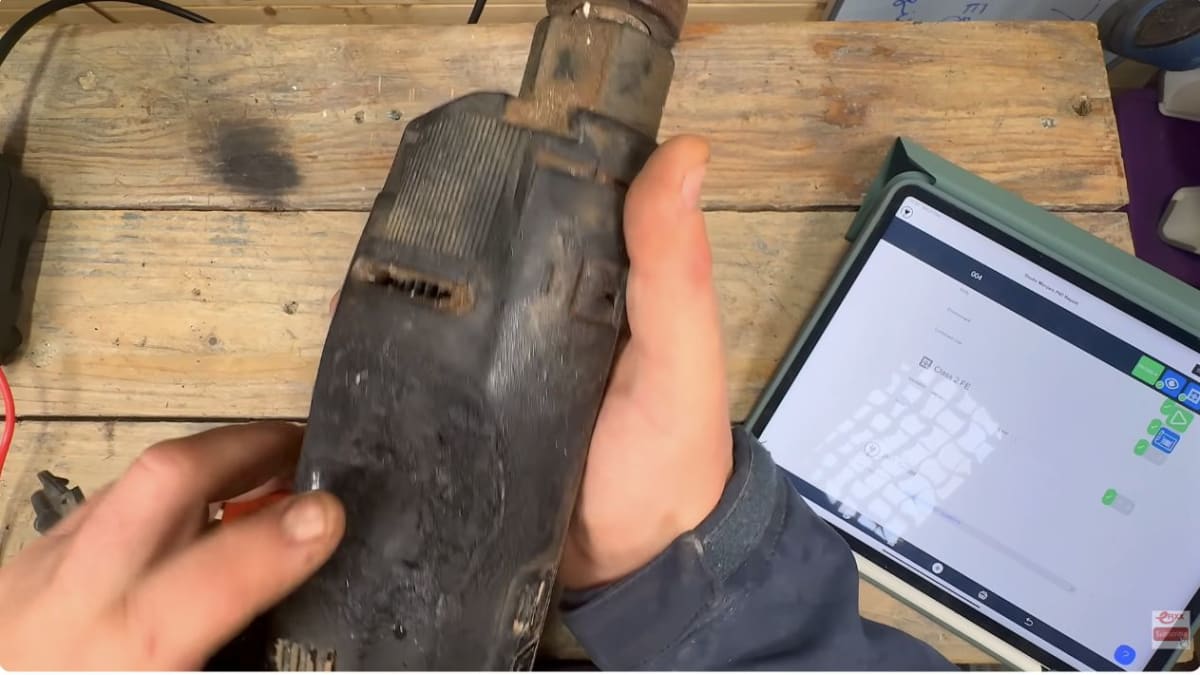
We inspected a Class II power drill showing visible heat damage to its casing.
The drill passed its insulation resistance test.
So, should it go straight back into service?
Not necessarily.
The tester measured an electrical characteristic under a particular set of conditions. It didn't determine whether the damaged enclosure would remain safe during operation.
That requires competent judgement and, where necessary, further investigation.
A passing electrical test cannot override an unsafe visual inspection.
The instrument gives you a reading. You make the safety decision.
3. Combined inspection and testing
Where electrical measurements are necessary, the formal visual inspection is followed by tests appropriate to the equipment.
These may include protective conductor continuity, insulation resistance, protective conductor or touch current, polarity and functional checks.
Not every appliance needs every test.
Selecting an inappropriate procedure can damage the equipment or expose the operative to danger.
Understanding appliance classes
Before selecting a test, the operative must identify how the appliance provides protection against electric shock.
| Class | How protection is provided | Typical example |
|---|---|---|
| Class I | Basic insulation and protective earthing | Metal-cased kettle or washing machine |
| Class II | Double or reinforced insulation | Many power tools and hairdryers |
| Class II FE | Class II shock protection with a functional earth | Certain laptop power supplies |
| Class III | Supply from a separated extra-low-voltage (SELV) source | Suitable extra-low-voltage equipment |
Class II appliances are commonly identified by the double-square symbol.
Class II FE equipment is particularly interesting.
It may have an earth connection, but that doesn't automatically make it Class I.
The functional earth may be needed to control electrical interference rather than to provide the protective earthing used for shock protection.
Similarly, Class III should not be confused with every piece of equipment operating at a low voltage. Its protective arrangement and supply characteristics matter.
Correct classification determines the appropriate inspection and testing methods.
How to carry out a PAT test: step by step
In our practical video, we use a Megger PAT250 SRX to inspect a range of electrical appliances.
The tester supports the necessary measurements, while connected CertSuite software enables equipment details, test results and inspection records to be captured electronically.
But the principles apply regardless of which suitable instrument is used.
Earth continuity testing
Class I equipment relies on a protective earth connection to exposed conductive parts that require earthing.
The protective conductor continuity test checks that this connection is intact and has sufficiently low resistance.
A poor reading might indicate a loose termination, damaged flex, corrosion or an inadequate probe connection.
But what constitutes an acceptable result?
It depends on the equipment, flexible cable length, conductor cross-sectional area and applicable test method.
A single arbitrary resistance limit shouldn't be applied to every appliance.
Worked example: A 15-metre extension lead
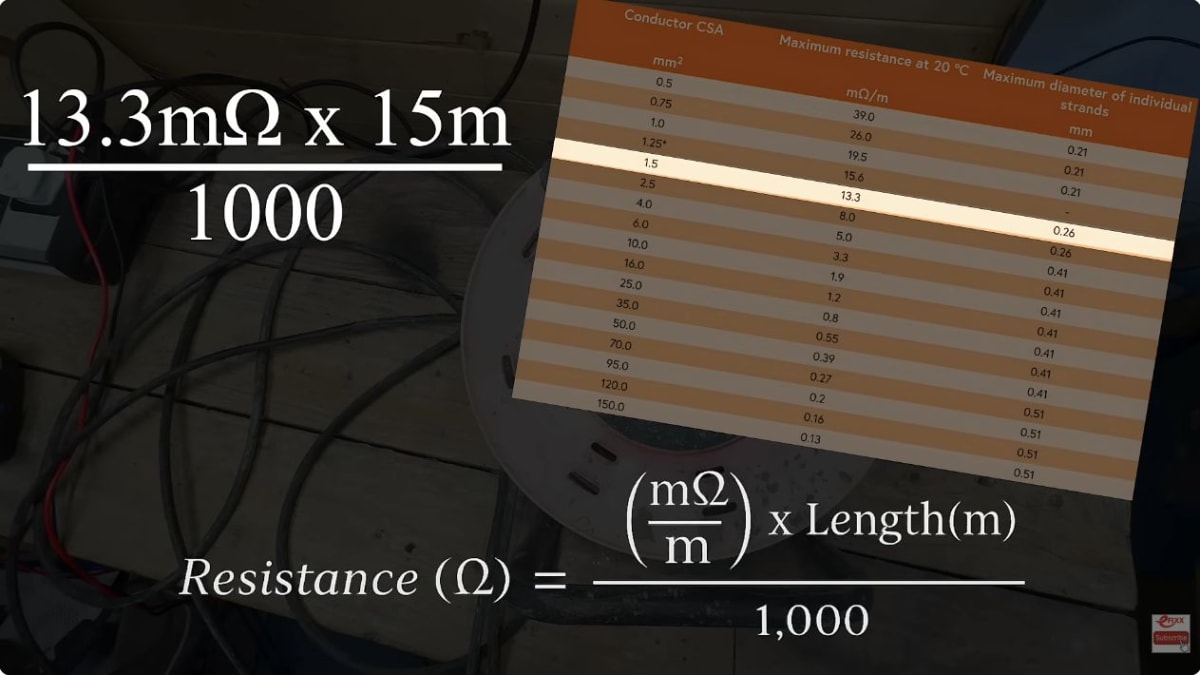
In the video, we demonstrate why cable length matters when assessing protective conductor continuity.
Consider a 15 m extension lead with a 1.5 mm² copper protective conductor.
Using an illustrative conductor resistance of 13.3 milliohms per metre:
13.3 mΩ × 15 m = 199.5 mΩ
That's approximately 0.20 Ω for the conductor.
Where the applicable Code of Practice method permits an additional 0.10 Ω allowance:
0.10 + 0.1995 = 0.2995 Ω
That gives an illustrative limit of approximately 0.30 Ω.
This isn't a universal pass value.
The operative must confirm that the calculation, test method and allowance apply to the equipment being inspected. Measurement uncertainty, test lead resistance and the manufacturer's instructions also need consideration.
The value of the example is understanding why longer conductors have greater resistance and why measurements need interpretation.
What if the reading is close to the limit?
A borderline result deserves investigation rather than an automatic assumption that everything is satisfactory.
Check the probe connection, instrument condition, lead compensation and expected conductor resistance.
Compare the measurement with the applicable test criteria and, where available, previous results.
If the operative cannot establish that the protective measures are satisfactory, the equipment should not simply be passed.
Insulation resistance testing
Insulation resistance testing helps assess the condition of insulation between live conductors and accessible conductive parts or earth, as appropriate to the equipment.
It can identify deterioration caused by damaged insulation, moisture ingress or contamination.
Although 500 V DC is commonly used where appropriate, it isn't suitable for every appliance.
Electronic components, surge protective devices and connected equipment may require a reduced voltage or alternative method.
A 250 V insulation resistance test is not automatically safe for all electronic equipment.
The correct procedure depends on the equipment's construction, the IET Code of Practice and relevant manufacturer's instructions.
Leakage current testing
Some appliances have small leakage currents during normal operation.
Equipment containing electromagnetic compatibility filters, for example, may produce measurable protective conductor or touch current without necessarily indicating a fault.
Leakage testing can be useful where insulation resistance testing is unsuitable or an appliance needs assessing under operating conditions.
Depending on the instrument and procedure, the appliance may become energised during the test.
Appropriate precautions are essential, particularly where heating elements, moving parts or other hazards are present.
The measured value must be compared with the relevant limits for the equipment and test method.
Polarity and functional checks
Extension leads and detachable power cords may require polarity checks to confirm that conductors are correctly connected.
Functional checks can also help establish whether switches, controls and other safety-related features operate correctly.
Electrical measurements are only part of assessing whether equipment is suitable for continued use.
What happens when an appliance fails?
An unsafe appliance must be identified and removed from service or otherwise effectively prevented from being used.
The defect should be reported to the responsible person.
Repairs must be carried out by someone competent, and appropriate inspection and testing should confirm that the equipment is suitable for return to service.
The original failure should also be recorded.
If every failed appliance is quietly repaired before the defect is entered into the maintenance system, valuable information about recurring faults disappears.
That history may reveal problems with equipment selection, user behaviour or the working environment.
Build your practical testing knowledge
We've covered the tests, the measurements and the judgement needed to interpret them.
Now reinforce your understanding through the free eFIXX PAT Testing CPD module, developed in association with Megger.
How often should PAT testing be carried out?
There is no universal annual PAT testing requirement.
The appropriate inspection and testing frequency depends on the risk of deterioration and the consequences of failure.
Consider three different environments.
| Environment | Risk considerations |
|---|---|
| Office | Stationary equipment, limited movement and relatively low exposure to mechanical damage |
| Workshop | Portable tools, repeated handling, dust, vibration and mechanical wear |
| Construction site | Frequent movement, outdoor exposure, impacts, moisture and damage to extension leads |
A portable drill regularly used on a construction site is likely to need closer attention than a computer monitor that rarely moves.
The inspection and testing frequency should reflect equipment type, user behaviour, working conditions, previous defects and maintenance history.
The HSE publishes guidance on suggested starting frequencies, but these are not mandatory intervals.
Why maintenance history matters
An organisation can use inspection and test results to assess whether its maintenance arrangements are working.
Repeated failures may justify shorter intervals, additional user training, better equipment or changes in operating procedures.
Conversely, consistently good results in a stable, low-risk environment may support longer intervals between formal tests.
The important point is that decisions should be based on evidence and risk, not simply the date printed on a sticker.
Are PAT testing labels and certificates compulsory?
Another common misconception concerns the familiar green PAT testing label.
The HSE confirms that the Electricity at Work Regulations do not impose a general requirement for every workplace appliance to carry a PAT label or have a specific PAT certificate.
However, records and labels can be extremely valuable.
A label can help identify an appliance and connect it with its maintenance records.
But it doesn't guarantee that the appliance is still safe.
An extension lead might have passed yesterday and been damaged this morning.
What should a PAT testing record contain?
A useful equipment maintenance system can include:
- An equipment register identifying individual appliances.
- Dates and findings of formal visual inspections.
- Electrical test results, where applicable.
- Details of defects and limitations.
- Repair and maintenance records.
- Identification of the person carrying out the work.
- Instrument identification, verification and calibration information.
- Risk assessments supporting the inspection and test intervals.
The records should help the duty holder identify which appliances are deteriorating, which environments cause repeated problems and whether maintenance arrangements need changing.
The IET Code of Practice provides recommendations for record-keeping, although these should be distinguished from specific legal obligations.
Certain sectors also have additional record requirements.
Do landlords need PAT testing?
Landlord obligations vary across the UK and depend on the type of accommodation and tenancy.
In England, landlords must comply with the applicable electrical safety requirements for rented properties.
An Electrical Installation Condition Report (EICR) relates to the condition of the fixed electrical installation. It isn't the same as an in-service inspection and testing record for electrical equipment.
Separate duties can apply to landlord-provided appliances.
In England's social rented sector, the relevant electrical safety regulations introduce specific requirements for checking landlord-provided electrical equipment, including a maximum five-year interval, subject to the regulations and their commencement and transitional provisions.
That should not be confused with a universal rule that every appliance in every privately rented property requires annual PAT testing.
Scotland, Wales and Northern Ireland have their own legal requirements and guidance.
Landlords and duty holders should check the requirements applicable to their property, tenancy and location.
Five PAT testing mistakes to avoid
1. Assuming every appliance needs an annual test
Inspection frequency should reflect risk, not habit.
2. Skipping the visual inspection
Good electrical readings cannot excuse obviously damaged or unsuitable equipment.
3. Selecting tests based only on the plug
The equipment's protective construction determines the appropriate procedure.
4. Applying unsuitable test voltages to electronic equipment
A conventional insulation resistance test may not be appropriate for every appliance.
5. Treating a pass label as a guarantee
Equipment can be damaged after inspection, and users still need to recognise and report defects.
Frequently asked questions about PAT testing
Is PAT testing compulsory in the UK?
There is no universal statutory requirement for annual PAT testing. Employers and other duty holders must maintain electrical equipment safely, and suitable inspection and testing arrangements may form part of meeting that obligation.
Can I carry out PAT testing myself?
You must be competent for the particular work involved. Straightforward user checks and certain visual inspections require less technical knowledge than electrical measurements or work involving safe isolation.
Does every appliance need an electrical test?
No. The need for testing depends on the equipment, its construction, working environment and risk assessment. User checks and formal visual inspections may be sufficient in some lower-risk circumstances.
How often does office equipment need PAT testing?
There is no fixed annual rule. The appropriate interval should be determined through risk assessment and reviewed using inspection findings and maintenance history.
Do new appliances need PAT testing?
Normally, new equipment supplied in a safe condition does not require formal PAT testing before first use. A visual check for damage is still recommended.
Do I need a PAT testing certificate?
There is no general requirement under the Electricity at Work Regulations for every workplace appliance to have a specific PAT certificate. Records are nevertheless valuable, and additional requirements may apply in particular sectors or under specific contracts.
Is PAT testing the same as an EICR?
No. PAT testing concerns electrical equipment and its maintenance. An EICR assesses the condition of a fixed electrical installation.
What does a failed PAT test mean?
It means equipment has not satisfied the relevant inspection or test criteria. The cause must be investigated, and unsafe equipment must not return to service until the problem has been appropriately resolved.
PAT testing is about maintaining safety, not collecting stickers
The best electrical equipment maintenance programme doesn't begin with a test instrument.
It begins with identifying equipment, understanding how it's used, recognising the hazards and deciding which checks will keep it safe.
Sometimes that means a straightforward user check. Sometimes it means a detailed formal visual inspection. And sometimes electrical measurements are needed to confirm that protective measures remain effective.
The important thing is knowing the difference.
A green sticker may show that an inspection took place. But it cannot replace a competent operative, a sound risk assessment or an effective maintenance programme.
A PAT tester can give you a pass. Can you explain why?
Watch the complete PAT testing video series
Further reading
- HSE: Portable Appliance Testing FAQs
- HSE: Maintaining Portable Electrical Equipment
- IET: Code of Practice for In-service Inspection and Testing of Electrical Equipment, Fifth Edition
- GOV.UK: Electrical Safety Standards in the Private and Social Rented Sectors
Technical note: Inspection procedures, test methods and limits must be selected using the applicable IET Code of Practice, the equipment construction and relevant manufacturers' instructions. The worked example is illustrative and does not replace the full technical requirements.